
10 Top SaaS Tools for Startups to Save Time, Reduce Costs, and Grow Faster in 2026
Introduction
The top SaaS tools for startups are cloud-based software applications that help businesses manage customers, marketing, projects, finances, communication, and growth without investing in expensive infrastructure.
Modern startups rely on SaaS (Software as a Service) tools to operate efficiently, automate repetitive tasks, and scale faster with limited resources.
Instead of purchasing software licenses and maintaining servers, startups access software through the internet on a subscription basis. This approach reduces costs, improves flexibility, and enables teams to work from anywhere.
Today, nearly every successful startup uses a software stack consisting of CRM platforms, project management systems, communication tools, marketing software, and accounting applications.
The challenge is not finding software. The challenge is choosing the right tools.
With thousands of SaaS products available, founders often struggle to identify which platforms provide the highest return on investment. Selecting the wrong tools can lead to wasted budgets, inefficient workflows, and operational complexity.
This article explains the best SaaS tools for startups, the categories every startup should consider, and how to build a software stack that supports long-term growth.
What Are SaaS Tools?
SaaS tools are cloud-based software applications that users access through a web browser instead of installing software on local computers or servers.
SaaS stands for Software as a Service.
Rather than buying software outright, businesses pay a monthly or annual subscription fee to access the application online.
The software provider manages:
- Hosting
- Security updates
- Maintenance
- Infrastructure
Examples of SaaS Tools
Most startups use multiple SaaS applications to manage different business functions.
Examples include:
| Category | Example Tool | Primary Purpose |
|---|---|---|
| CRM Platform | HubSpot CRM | Customer relationship management |
| Marketing Automation | Mailchimp | Email marketing and automation |
| Project Management | Asana | Task and project tracking |
| Accounting Software | QuickBooks | Financial management |
| Team Communication | Slack | Internal collaboration |
| Design Platform | Canva | Marketing content creation |
| Business Productivity | Google Workspace | Documents, email, and collaboration |
| Workflow Automation | Zapier | Process automation |
Benefits of SaaS Tools for Startups
SaaS tools offer several advantages that help startups grow faster:
- Lower Costs – No need for expensive hardware or IT infrastructure
- Fast Setup – Get started in minutes
- Scalability – Easily upgrade as your business grows
- Improved Productivity – Automate repetitive tasks
- Automatic Updates – Always use the latest version
- Remote Access – Work from anywhere
- Data & Analytics – Make informed decisions
Categories of SaaS Tools Every Startup Needs
The most important SaaS tool categories for startups are CRM, marketing, project management, finance, communication, automation, customer support, analytics, and design tools.
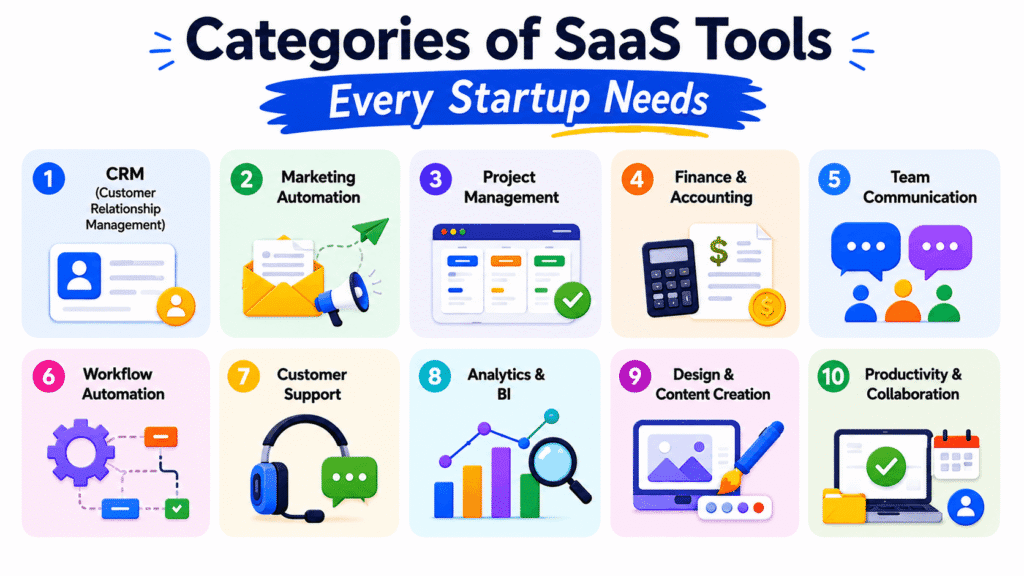
Each category solves a specific business problem. Together, they form a complete startup software stack that supports growth, efficiency, and scalability.
Rather than adopting dozens of tools, startups should select software that addresses their most critical operational needs.
1. CRM (Customer Relationship Management) SaaS Tools
CRM (Customer Relationship Management) tools help businesses manage customer interactions, sales opportunities, and relationships.
A CRM serves as the central database for customer information and sales activities.
Popular CRM Tools
- HubSpot CRM
- Salesforce
- Pipedrive
- Zoho CRM
- Freshsales
2. Marketing Automation SAAS Tools
Marketing automation tools help startups attract, nurture, and convert leads through automated marketing campaigns.
These platforms streamline marketing activities and reduce manual work.
Popular Marketing Automation Tools
- Mailchimp
- ActiveCampaign
- Brevo
- ConvertKit
- Klaviyo
3. Project Management SAAS Software
Project management software helps teams organize tasks, track progress, and collaborate effectively.
As startups grow, managing projects through spreadsheets becomes inefficient.
Popular Project Management SAAS Tools
- Asana
- ClickUp
- Trello
- Monday.com
- Jira
4. Accounting and Finance SaaS Software for Startups
Finance software helps startups manage accounting, cash flow, invoicing, and financial reporting.
Financial visibility is essential for sustainable growth.
Popular Finance Tools
- QuickBooks
- Xero
- FreshBooks
- Wave
- Zoho Books
5. Team Communication Platforms
Communication platforms help teams collaborate, share information, and coordinate work efficiently.
Clear communication becomes increasingly important as startups expand.
Popular Communication Tools
- Slack
- Microsoft Teams
- Google Chat
- Discord
- Zoom
6. Workflow Automation SAAS Tools
Automation tools connect applications and automate repetitive business processes.
Automation reduces manual work and improves operational efficiency.
Popular Automation SAAS Tools
- Zapier
- Make
- n8n
- Workato
- Integrately
7. Customer Support Software
Customer support software helps businesses manage customer inquiries and improve customer satisfaction.
Excellent customer service can significantly improve retention rates.
Popular Customer Support Tools
- Zendesk]
- Freshdesk
- Intercom
- Help Scout
- LiveChat
8. Analytics and Business Intelligence SAAS Tools
Analytics tools help startups measure performance and make data-driven decisions.
Businesses that understand their data can identify opportunities and optimize growth strategies.
Popular Analytics SAAS Tools
- Google Analytics 4
- Mixpanel
- Amplitude
- Looker Studio
- Hotjar
9. Design and Content Creation SAAS Tools
Design tools help startups create professional marketing materials, presentations, and visual content.
Strong branding improves credibility and customer trust.
Popular Design Tools
- Canva
- Adobe Express
- Figma
- Adobe Creative Cloud
- Visme
10. Productivity and Collaboration Tools
Productivity tools help teams organize information, document processes, and improve operational efficiency.
These tools often become the central knowledge hub for a startup.
Popular Productivity Tools
- Notion
- Google Workspace
- Confluence
- Coda
- Evernote
10 Top SaaS Tools Every Startup Needs to Save Time, Reduce Costs, and Grow Faster in 2026
The best SaaS tools for startups are HubSpot CRM, Notion, Slack, Asana, QuickBooks, Mailchimp, Zapier, Canva, Google Workspace, and Stripe.
These tools help startups manage customers, automate marketing, improve productivity, streamline operations, and scale efficiently. Together, they form a modern startup software stack that supports growth from the early stages through expansion.
The sections below explain what each tool does, who it is best for, its key features, pricing, advantages, and limitations.
1. HubSpot CRM
HubSpot CRM is one of the best SaaS tools for startups because it combines customer relationship management, sales tracking, and marketing tools in a user-friendly platform.
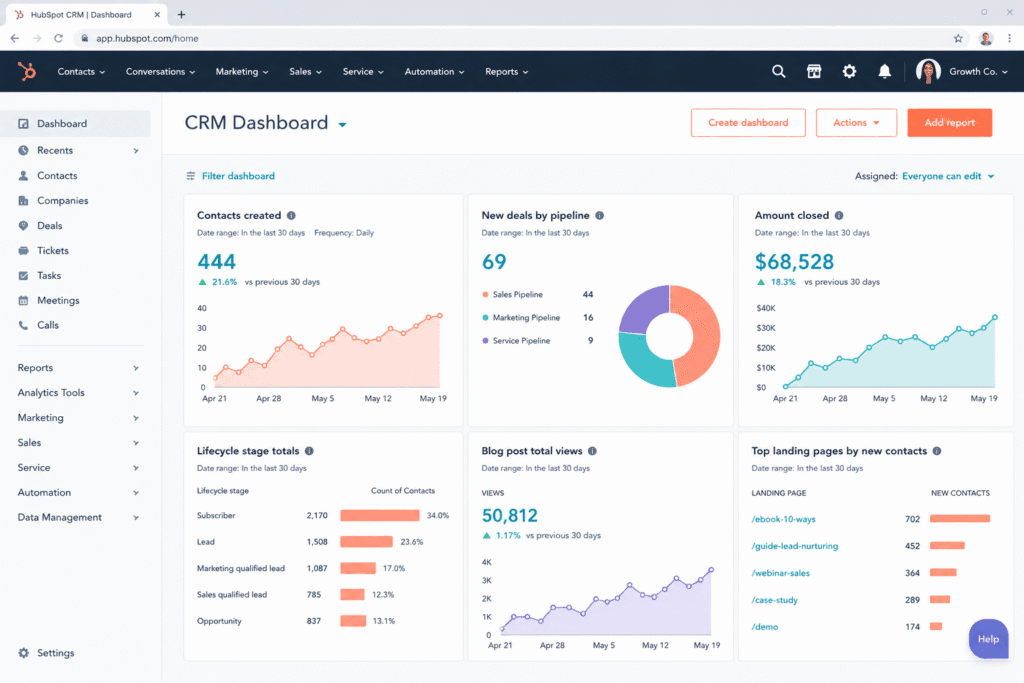
A CRM (Customer Relationship Management) platform helps businesses manage customer interactions, sales pipelines, and lead information.
HubSpot CRM is widely used by startups because it offers powerful features through a generous free plan.
Key Features
- Contact management
- Sales pipeline tracking
- Email tracking
- Marketing automation
- Reporting dashboards
- Customer segmentation
Pros
- Free CRM available
- Easy setup
- Scalable as the company grows
Cons
- Premium plans become expensive
- Advanced automation requires higher tiers
2. Notion
Notion is a productivity and knowledge-management platform that helps startups organize documents, processes, projects, and company information.
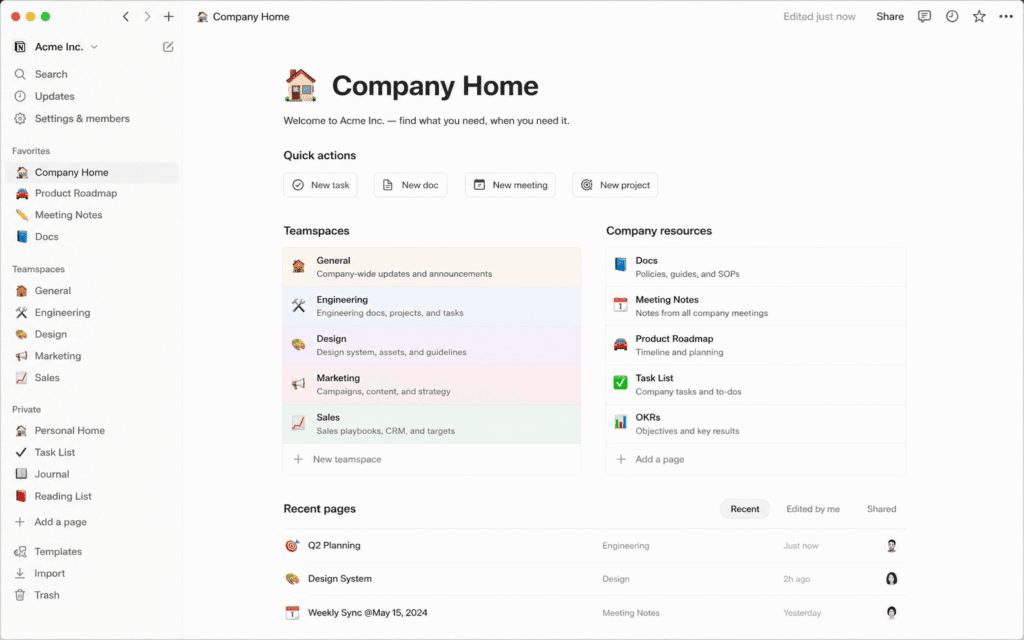
Many startups use Notion as their internal operating system.
Instead of storing information across multiple documents and folders, teams can centralize everything in one workspace.
Key Features
- Documentation
- Company wiki
- Task management
- Databases
- Team collaboration
- Templates
Pros
- Highly flexible
- Excellent collaboration features
- Easy documentation management
Cons
- Can become complex
- Requires initial setup
3. Slack
Slack is a team communication platform that helps startups collaborate faster and reduce reliance on email.
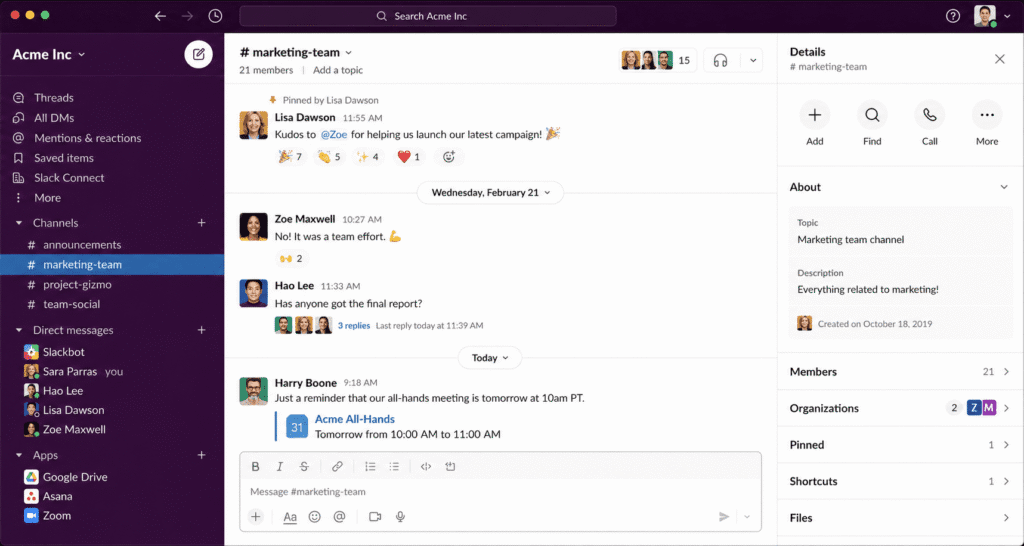
Communication speed often determines startup success.
Slack organizes conversations into channels, making information easier to find and manage.
Key Features
- Team messaging
- Project channels
- File sharing
- Voice calls
- Video meetings
Pros
- Easy collaboration
- Fast communication
- Extensive integrations
- User-friendly interface
Cons
- Can become distracting
- Message history limitations on free plans
4. Asana
Asana is a project management platform that helps startups plan, organize, and track work across teams.
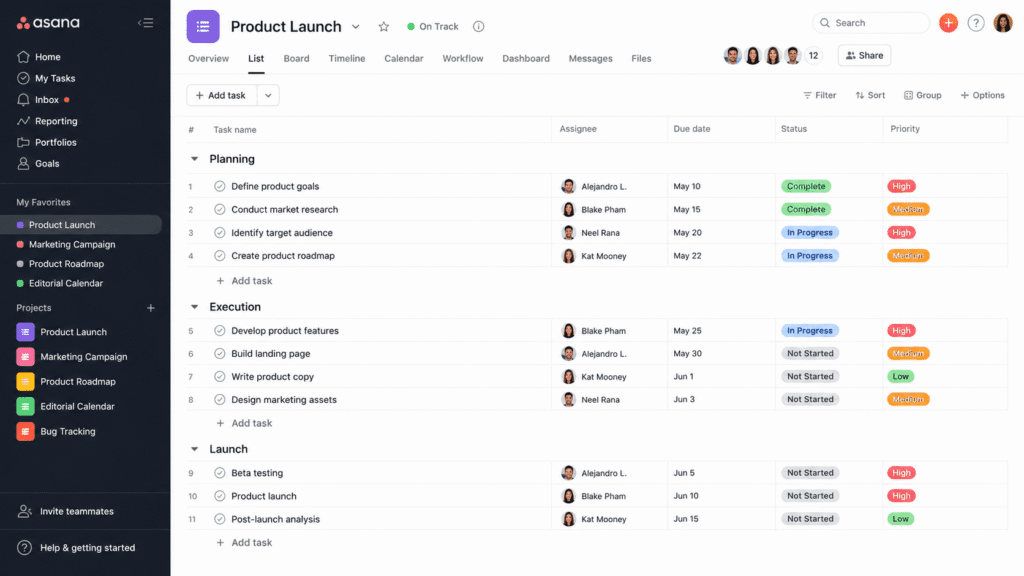
As startups grow, task management becomes increasingly important.
Asana helps teams stay aligned on priorities and deadlines.
Key Features
- Task management
- Project tracking
- Workflow automation
- Team collaboration
Pros
- Easy task management
- Strong reporting
- Excellent project visibility
Cons
- Advanced features require paid plans
- May feel overwhelming initially
5. QuickBooks
QuickBooks is one of the most popular accounting SaaS tools for startups and small businesses.
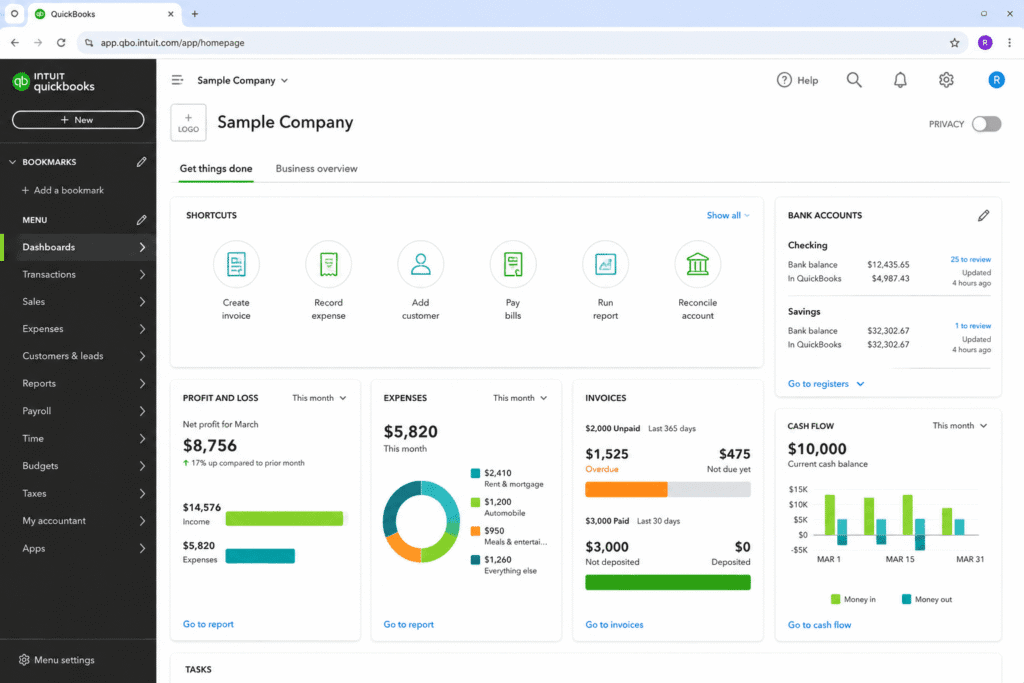
Financial management is critical for startup survival.
QuickBooks helps founders understand revenue, expenses, profitability, and cash flow.
Key Features
- Expense tracking
- Invoicing
- Accounting
- Financial reports
- Tax preparation support
- Cash flow monitoring
Pros
- Comprehensive accounting tools
- Strong reporting capabilities
- Industry-standard platform
Cons
- Subscription costs increase over time
- Learning curve for beginners
6. Mailchimp
Mailchimp helps startups build email lists, automate campaigns, and nurture customer relationships.
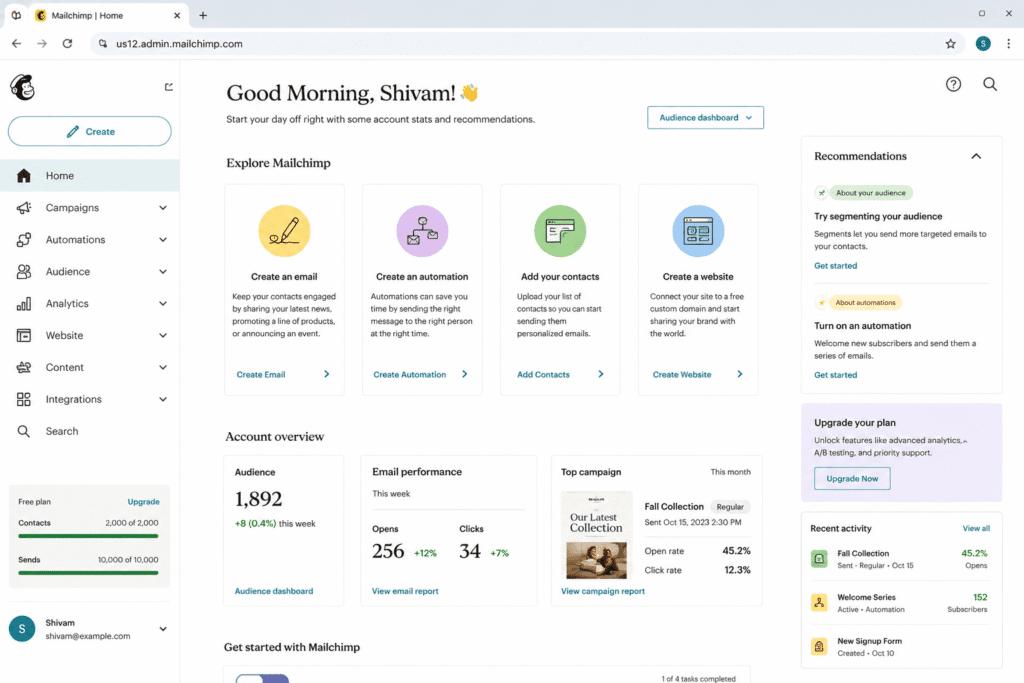
Email marketing remains one of the highest-ROI marketing channels.
Mailchimp simplifies campaign management and audience segmentation.
Key Features
- Email campaigns
- Marketing automation
- Audience segmentation
- Analytics
- Customer journeys
Pros
- Beginner-friendly
- Automation features
- Free plan available
Cons
- Pricing increases as subscriber lists grow
- Advanced automation requires premium plans
7. Zapier
Zapier automates repetitive tasks by connecting different SaaS applications.
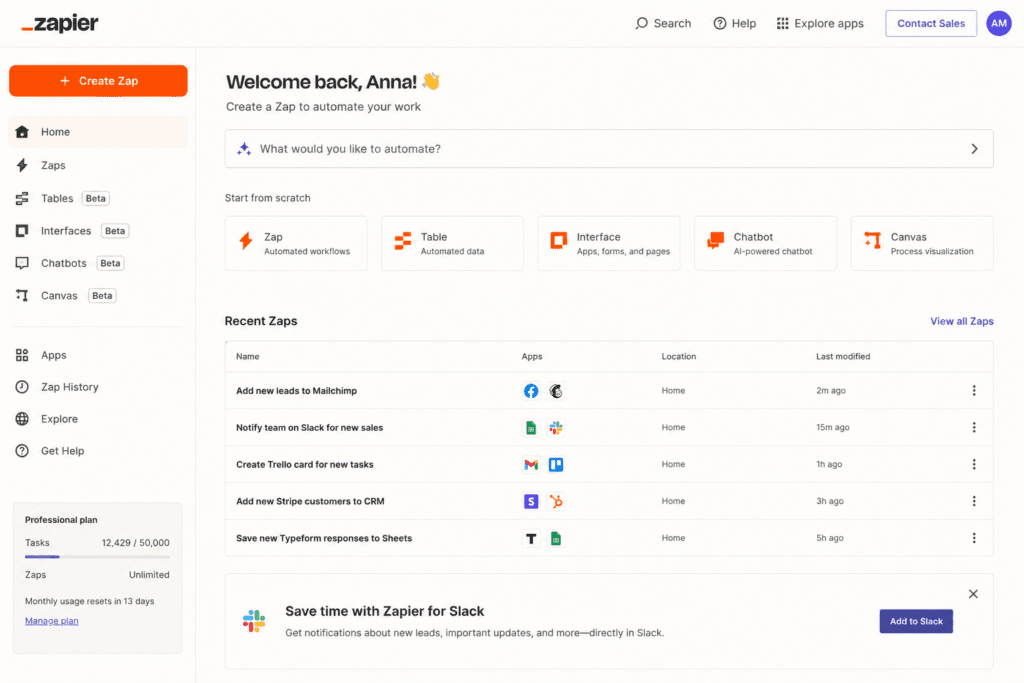
Automation saves startups time and reduces manual work.
Zapier connects thousands of applications without coding.
Key Features
- Workflow automation
- App integrations
- Multi-step automations
- Trigger-based actions
- Data synchronization
Pros
- No coding required
- Large integration library
- Significant time savings
Cons
- Costs increase with usage
- Complex workflows may require learning
8. Canva
Canva helps startups create professional designs without advanced graphic design skills.
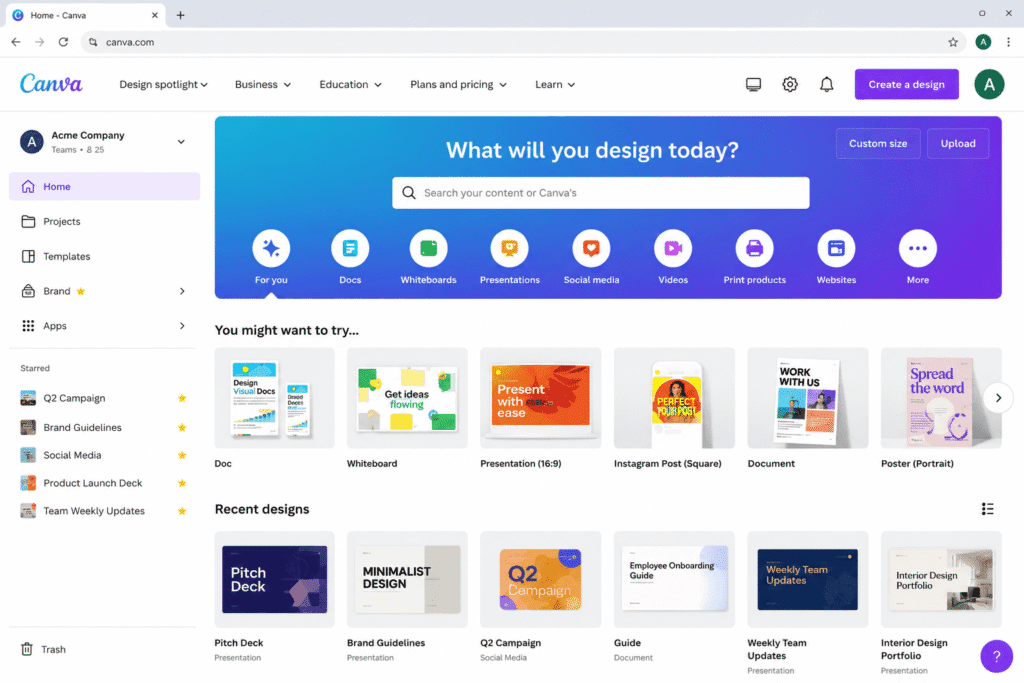
Visual content plays a major role in modern marketing.
Canva enables founders and marketers to create graphics quickly.
Key Features
- Social media graphics
- Presentations
- Brand kits
- Video editing
- Marketing templates
Pros
- Easy to use
- Affordable
- Large template library
Cons
- Limited advanced design functionality
- Popular templates may be widely used
9. Google Workspace
Google Workspace provides essential productivity tools including Gmail, Docs, Sheets, Meet, and Drive.
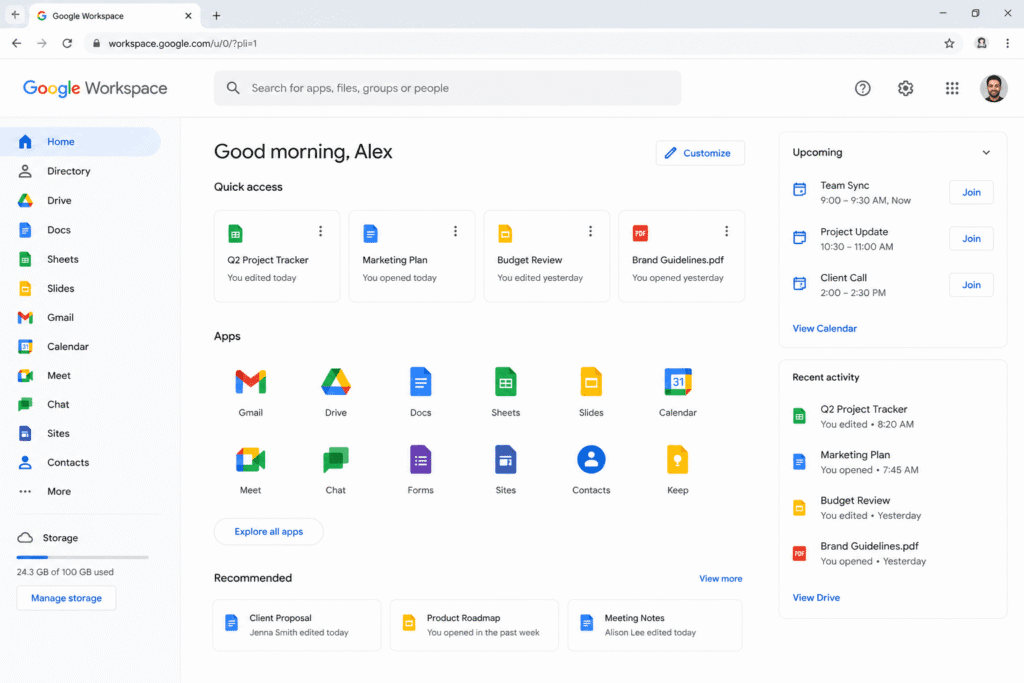
Many startups use Google Workspace as the foundation of daily operations.
Key Features
- Business email
- Document collaboration
- Video meetings
- Cloud storage
- Team collaboration
Pros
- Reliable ecosystem
- Easy collaboration
- Familiar interface
Cons
- Storage limits on lower plans
- Limited customization
10.Stripe
Stripe is a payment processing platform that helps startups accept online payments globally.

For SaaS businesses and e-commerce startups, payment processing is essential.
Stripe provides secure payment infrastructure and subscription billing tools.
Key Features
- Online payments
- Subscription billing
- Global transactions
- Fraud protection
- Payment analytics
Pros
- Global payment support
- Developer-friendly
- Scalable infrastructure
Cons
- Transaction fees apply
- Some technical setup may be required
Comparison Table: Best SaaS Tools for Startups
| Tool | Category | Best For | Free Plan |
|---|---|---|---|
| HubSpot CRM | CRM | Customer Management | Yes |
| Notion | Productivity | Documentation & Knowledge | Yes |
| Slack | Communication | Team Collaboration | Yes |
| Asana | Project Management | Task Management | Yes |
| QuickBooks | Finance | Accounting | No |
| Mailchimp | Marketing | Email Marketing | Yes |
| Zapier | Automation | Workflow Automation | Yes |
| Canva | Design | Content Creation | Yes |
| Google Workspace | Productivity | Business Operations | No |
| Stripe | Payments | Payment Processing | No |
Related Articles
AI Tools
Google Tools
10 Free Google Tools Every Content Creator Needs
Conclusion: Choosing the Right SaaS Tools for Startup Success
Selecting the top SaaS tools every startup needs is not about using the most tools—it’s about choosing the right ones that solve your most critical business challenges.
From CRM and marketing automation to project management, finance, and analytics, each SaaS category plays a vital role in building a scalable and efficient startup. The right combination of tools can help you save time, reduce operational costs, improve collaboration, and accelerate growth.
Startups should focus on:
- Prioritizing tools that deliver immediate value
- Integrating software to create a seamless workflow
- Avoiding tool overload that slows down productivity
As your business grows, your SaaS stack should evolve with your needs. Continuously evaluate your tools to ensure they align with your goals and support long-term success.
By investing in the top SaaS tools every startup should use, you’re not just optimizing operations—you’re building a strong foundation for sustainable growth in 2026 and beyond.