
How to Integrate SEO into Your Content: 7 Simple Steps to Rank on Page 1 in 2026
Introduction

In today’s digital world, creating content alone is not enough. If your content is not optimized for search engines, it may never reach your target audience. That’s where SEO integration comes in.
SEO integration means combining search engine optimization strategies with content creation to improve visibility, rankings, and traffic. Whether you are a beginner or an experienced blogger, learning how to integrate SEO into your content can dramatically boost your results.
In this article, you will learn everything you need to know about SEO integration and how to apply it step by step.
What is SEO Integration?
SEO integration is the process of naturally including SEO techniques into your content so that it ranks higher on search engines.
Instead of writing content first and optimizing later, SEO integration ensures that optimization is part of the content creation process from the beginning.
Why SEO Integration Matters in 2026
Search engines have become more advanced and now prioritize:
- User intent (what the reader is actually looking for)
- Content quality and depth
- Relevance and context
If your content does not align with these factors, it will not rank—regardless of how good it looks.
Key Benefits of Integrating SEO into Your Content
1. Higher Google Rankings
When your content is optimized, it becomes easier for search engines to understand and rank it.
2. Increased Organic Traffic
SEO brings free traffic from search engines, which is more sustainable than paid ads.
3. Better User Experience
Well-structured content improves readability and keeps users engaged longer.
How to Integrate SEO into Your Content (Step-by-Step)

Step 1: Start with Keyword Research
Keyword research is the foundation of effective SEO content.
Focus on keywords that:
- Have clear search intent
- low competition
- Match what your audience is searching for
Example:
Instead of targeting a broad keyword like:
- “SEO”
Use a long-tail keyword:
- “How to integrate SEO into your content”
Step 2: Optimize Your Title and Meta Description
Your title is the first thing users see in search results.
Your title should:
- Include your main keyword
- Be clear and engaging
- Encourage clicks
Example optimized title:
How to Integrate SEO into Your Content (2026 Beginner’s Guide That Works)
Your meta description should:
- Summarize the article clearly
- Include your keyword naturally
- Being compelling enough to attract clicks
Step 3: Use Proper Heading Structure (H1, H2, H3)
Headings help both users and search engines understand your content.
Best practices:
- Use only one H1 (main title)
- Use H2 for main sections
- Use H3 for sub-sections
This improves:
- Readability
- SEO performance
- Content organization
Step 4: Align Content with Search Intent
Before writing, ask:
What problem is the user trying to solve?
Types of search intent:
- Informational (learning something)
- Navigational (finding a site)
- Transactional (ready to take action)
Your content must match the intent behind the keyword.
Step 5: Add Internal and External Links
Internal links:
- Connect related articles on your website
- Help users explore more content
- Improve site structure
External links:
- Link to credible sources
- Support your claims
- Build trust with search engines
Step 6: Optimize Images with Alt Text
Images improve engagement, but they also need optimization.
Best practices:
- Use relevant images
- Add descriptive alt text
- Compress images for faster loading
Example alt text:
“on-page SEO checklist for blog content”
Step 7: Write High-Quality, Valuable Content
Content quality is the most important ranking factor.
Your content should be:
- Clear and easy to read
- Informative and practical
- Focused on solving user problems
Avoid:
- Keyword stuffing
- Copying content
- Writing without structure
SEO Integration and Content Strategy
SEO and content marketing work best when combined.
SEO helps you:
- Discover topics people are searching for
- Optimize content for visibility
- Drive consistent, long-term traffic
Example:
Instead of writing a general topic like:
- “AI tools”
Use SEO-driven topics like:
Common SEO Integration Mistakes to Avoid
1. Keyword Stuffing
Using the same keyword too many times can harm your ranking.
2. Ignoring User Intent
Always focus on what the user actually needs.
3. Poor Content Structure
Long paragraphs without headings reduce readability.
Best Tools for SEO Integration
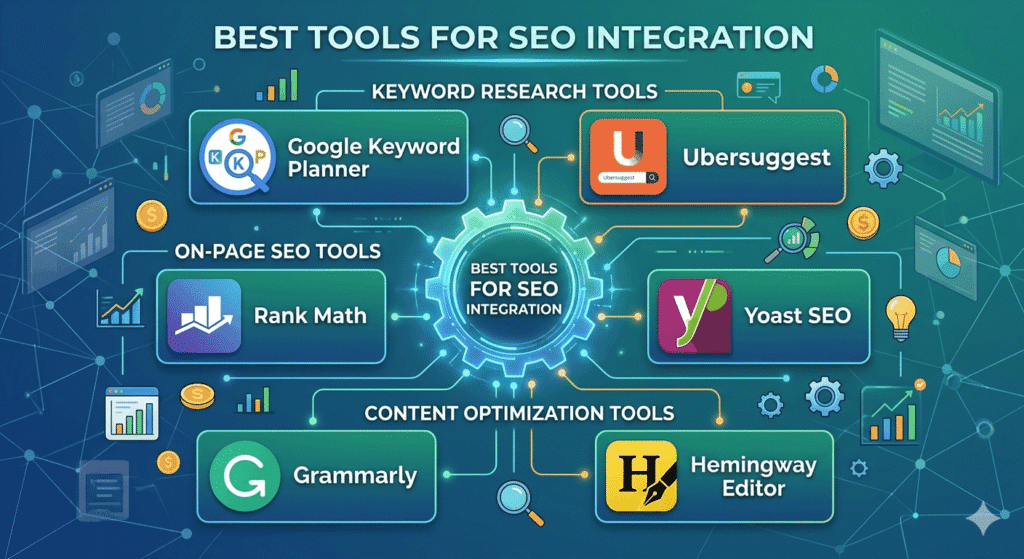
Here are some useful tools:
Keyword Research Tools
On-Page SEO Tools
Content Optimization Tools
Advanced Tips to Improve SEO Performance
1. Focus on Long-Tail Keywords
They are easier to rank for and more targeted.
Update Old Content
Refreshing old posts improves rankings.
3. Improve Content Depth
Add examples, explanations, and detailed insights to increase value.
Frequently Asked Questions (FAQs)
What is SEO integration?
How long does SEO take to work?
Can beginners learn SEO easily?
Is SEO still important in 2026?
Conclusion
SEO integration is essential if you want your content to succeed online. By combining keyword research, optimization, and high-quality writing, you can create content that ranks and drives traffic.
Start applying these steps today, and you will begin to see improvements in your website’s performance.






One Comment