
Free Personal Budgeting Tools for Beginners (2026 Guide)
Introduction: What Is Personal Budgeting and Why It Matters
Personal budgeting is the process of tracking your income and expenses to manage your money effectively. It helps you understand where your money goes, avoid overspending, and achieve financial goals like saving, investing, or paying off debt
For beginners, managing money can feel confusing and even overwhelming at first. That’s why free personal budgeting tools are so valuable. They simplify money management by automatically tracking your expenses, organizing your spending into clear categories, and providing real-time insights into your financial habits.
Instead of guessing where your money goes, these tools give you full clarity and control. With the right budgeting app, you can set financial goals, monitor your progress, and make smarter decisions every day. Whether you want to save more, reduce debt, or build a solid monthly budget, these tools provide the structure and confidence you need to achieve long-term financial success.
Best Free Personal Budgeting Tools for Beginners
1. Mint (by Intuit)
Mint is one of the most popular free budgeting apps for beginners. It connects securely to your bank accounts and automatically tracks your spending, giving you a complete view of your finances in one place.
- Platform: Web, iOS, Android
- Pros: Automatic syncing with most bank accounts.
- Cons: Ads and product recommendations can be distracting.
- Website: mint.intuit.com
Key Features
- Automatic expense tracking
- Bill reminders
- Credit score monitoring
- Budget creation and tracking tools
2. EveryDollar (Free Plan)
EveryDollar is a zero-based budgeting app designed to help you track spending, find extra margin, and strategically grow your wealth while eliminating debt.
- Platform: Web, iOS, Android
- Pros: Very beginner-friendly.
- Cons: Bank connections require paid plan.
- Website: everydollar.com
Key Features
- Simple budget planning
- Expense tracking
- Monthly budget templates
3. PocketGuard
PocketGuard is a personal finance and budgeting app designed to help users track spending, manage bills, and reduce debt.
- Platform: Web, iOS, Android
- Pros: Visual and easy to understand.
- Cons: Some features (like debt payoff) require paid version.
- Website: pocketguard.com
Key Features
- “In My Pocket” spending feature
- Expense categorization
- Bill tracking
4. Goodbudget
Goodbudget is a personal budgeting app that uses the envelope system to help users plan their spending, track expenses, and manage their finances more effectively.
- Platform: Web, iOS, Android
- Pros: Great for couples or shared financial goals.
- Cons: Manual entry takes time.
- Website: goodbudget.com
Key Features
- Envelope budgeting system
- Budget sharing (great for couples)
- Expense tracking
5. Monarch Money (Free Trial / Freemium)
Monarch Money is a personal finance app that allows users to track spending, manage budgets, monitor net worth, and plan financial goals in one place.
- Platform: Web, iOS, Android
- Pros: Beautiful interface, multiple account tracking.
- Cons: Full access requires a subscription.
- Website: monarchmoney.com
Key Features
- Financial goal tracking
- Investment tracking
- Budget planning
6. Spreadsheet-Based Tools
Spreadsheet-based budgeting tools are customizable financial planning systems that use spreadsheets to track income, expenses, and savings manually.
- Platform: Web (Google Sheets) or Desktop (Excel)
- Pros: Free and flexible.
- Cons: Manual input unless paired with automation tools.
- Try: Google Sheets Budget Template
Key Features
- Full customization
- Manual expense tracking
- Budget formulas
How to Choose the Right Budgeting Tool
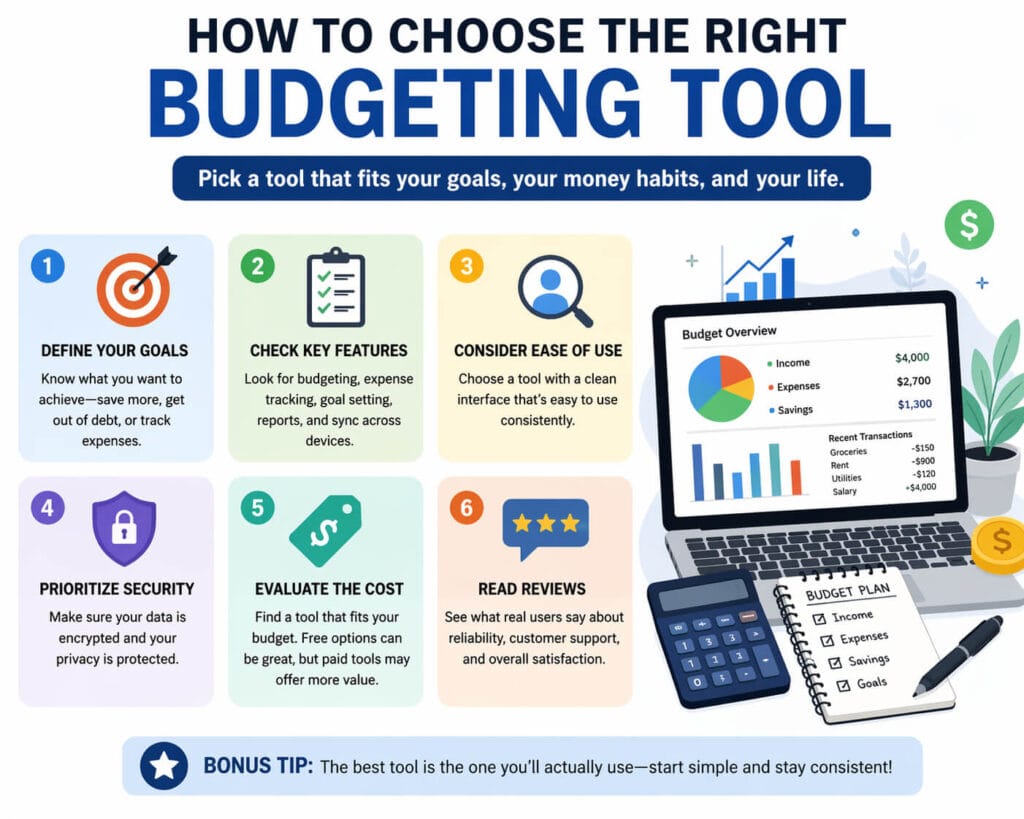
Choosing the right budgeting tool depends on your specific financial goals, your preferred level of manual control, and your comfort with sharing data.
1. Match the Tool to Your Goal
The most effective tool is often determined by what you are trying to achieve:
- Getting Out of Debt: Look for tools that use Zero-Based Budgeting, where every dollar is assigned a job ( EveryDollar).
- Controlling Overspending: Apps like PocketGuard calculate how much “In My Pocket” cash you have left after bills and goals are covered.
- Couples/Shared Finances: Tools like Monarch Money allow multiple users to sync accounts and communicate about shared expenses.
- Wealth & Net Worth Tracking: High-level aggregators like Empower (formerly Personal Capital) focus on long-term investment and retirement tracking.
2. Compare Features & Effort
Consider how much work you want to put into the process each week:
| Feature | Low Effort (Hands-Off) | High Effort (Manual/Disciplined) |
| Data Entry | Automatic Syncing: Apps link directly to your bank to pull transactions. | Manual Entry: You enter every transaction by hand to build awareness (e.g., Goodbudget). |
| Categorization | AI-Powered: The tool automatically tags “Starbucks” as “Dining Out”. | Custom Rules: You manually approve or sort every transaction into your own specific categories. |
| Cost | Paid Subscriptions: Often provide advanced AI, ad-free views, and bill negotiation. | Free Tools: Basic tracking, spreadsheets, or physical envelopes. |
3. Essential Security & Access
Regardless of the tool, ensure it meets these non-negotiable standards:
- Bank-Grade Encryption: Uses 256-bit encryption to protect your data.
- Multi-Factor Authentication (MFA): Requires a second verification step to log in.
- Platform Compatibility: Check if you need a desktop version for deep analysis or a mobile-only app for on-the-go tracking.
Common Budgeting Mistakes to Avoid
- Not tracking expenses
- Setting unrealistic budgets
- Ignoring small daily spending
- Not reviewing your budget regularly
- Giving up too early
Conclusion: Start Your Budgeting Journey Today
Using free personal budgeting tools for beginners is one of the smartest steps you can take toward achieving financial stability and long-term success.
These tools are designed to make money management simple, helping you take control of your finances without stress or confusion.
Free Personal Budgeting Tools, they help you:
- Track your income and expenses easily
- Save money more effectively
- Plan and reach your financial goals with confidence



One Comment