
Finance Basics for Beginners: Stop Wasting Your Money and Start Managing It Smartly
Introduction
Finance is a term you hear almost every day on the news, in business discussions, and even in daily conversations. But what does it really mean?

What is finance
In simple terms, finance is the management of money. It involves how money is earned, spent, saved, invested, and protected over time.
For beginners, understanding finance basics is the first step toward making smarter financial decisions. Whether you are planning to save money, start a business, or invest for the future, finance plays a key role in your life.
What Does Finance Include?
Finance covers several important activities, such as:
- Earning money (salary, business income, side hustle)
- Spending money (daily expenses, bills, lifestyle)
- Saving money (emergency funds, future goals)
- Investing money (stocks, bonds, mutual funds)
- Protecting money (insurance, risk management)
In short, finance is both an art and a science of making smart decisions about money.
Simple Example of personal finance in action
Imagine you earning $500 per month:
- You spend $300 on needs
- You save $100
- You invest $100
Why Understanding Finance Matters for Beginners
Learning finance basics for beginners helps you:
- Make better financial decisions
- Avoid unnecessary debt
- Build savings and wealth
- Plan for the future
Finance in Real Life
Finance is not only for experts or businesses, but also something everyone uses every day.
For example:
- When you create a budget → you are using finance
- When you save money → you are practicing finance
- When you invest → you are applying finance principles
Types of Finance
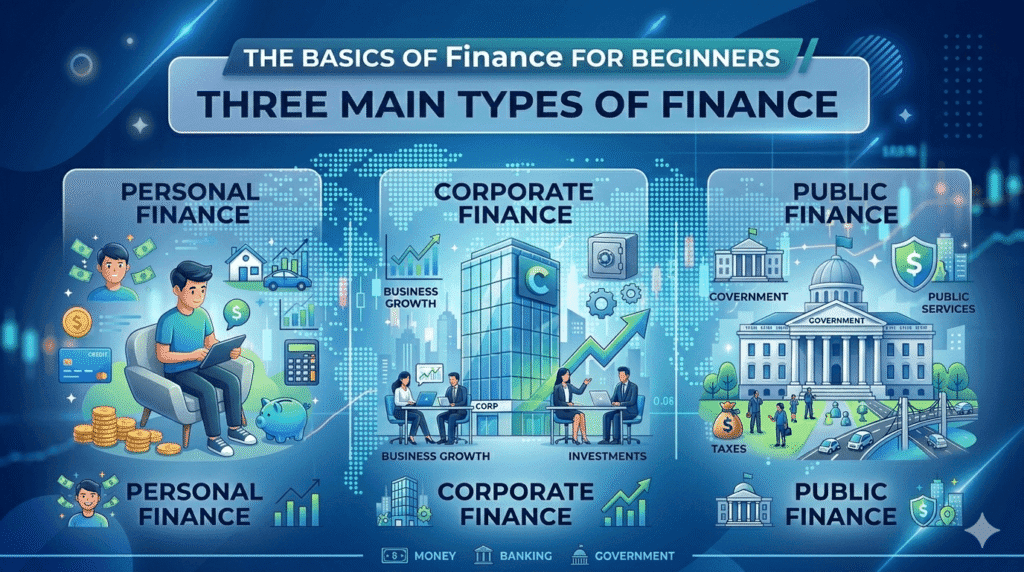
To fully understand finance basics for beginners, it is important to know that finance is divided into three main types. Each type focuses on a different area of money management.
These are:
- Personal Finance
- Corporate Finance
- Public Finance
1. Personal Finance
Personal finance is about how individuals and families manage their money in daily life.
It includes all financial decisions you make, such as earning, spending, saving, and investing.
Key Areas of Personal Finance:
- Budgeting (tracking income and expenses)
- Saving money for future goals
- Investing in assets (stocks, businesses, etc.)
- Managing debt (loans, credit cards)
- Insurance (health, life, property)
- Retirement planning
Example:
If you decide to save $100 every month and invest it in a small business or fund, you are practicing personal finance basics.
2. Corporate Finance
Corporate finance deals with how companies manage their money and financial decisions.
The main goal of corporate finance is to maximize profits and grow the business.
Key Areas of Corporate Finance:
- Raising capital (loans, investors, shares)
- Investment decisions (projects, expansion)
- Managing cash flow
- Financial planning and budgeting
Ready to take control? Start tracking your money today with these Free Personal Budgeting Tools for Beginners. Master your spending at zero cost!”
Example:
When a company raises money from investors to expand its business, it is using corporate finance.
3. Public Finance
Public finance focuses on how governments manage money and resources for the country.
It involves collecting revenue and spending it on public services.
Key Areas of Public Finance:
- Tax collection
- Government spending (education, healthcare, infrastructure)
- Managing national debt
- Creating budgets and economic policies
Example:
When a government announces its annual budget, it is practicing public finance.
Organizations like International Monetary Fund often help countries manage public finance and economic stability.
Why Understanding These Types Matters
Knowing the different types of finance helps you:
- Understand how money works at different levels
- Make better personal financial decisions
- Learn how businesses and governments operate
- Build a strong foundation in financial management
Why is Finance Important? (Real-Life Impact Explained)

Understanding finance basics for beginners is not just about learning definitions, it’s about improving your real life. Finance plays a critical role in how you manage your money, plan your future, and achieve your goals.
Without proper financial knowledge, it becomes easy to overspend, fall into debt, or miss opportunities to grow your wealth.
1. Helps You Make Smart Financial Decisions
Finance teaches you how to make informed choices about money.
Every day, you face decisions like:
- Should you save or spend?
- Should you invest or wait?
- Should you take a loan or avoid it?
Real-Life Example:
Instead of buying an expensive phone immediately, you may decide to save and invest that money first, this is smart financial decision-making.
2. Helps You Build and Grow Wealth
One of the biggest benefits of finance is wealth creation.
Saving money is important, but investing helps your money grow over time.
Finance helps you understand:
- Where to invest
- How to manage risk
- How to earn passive income
Example:
If you invest regularly in assets like stocks or businesses, your money can grow significantly over time.
3. Prepares You for Emergencies
Life is unpredictable. Emergencies like illness, job loss, or unexpected expenses can happen at any time.
Finance helps you:
- Build an emergency fund
- Plan for unexpected costs
- Avoid financial stress
Example:
If you save money every month, you will have a safety net during difficult times.
4. Reduces Financial Stress
Money problems are one of the biggest causes of stress.
When you understand finance:
- You control your money
- Your expenses are planned
- Your future is secure
5. Helps You Plan for the Future
Finance allows you to set and achieve long-term goals, such as:
- Buying a house
- Starting a business
- Funding education
- Planning retirement
Example
By saving and investing early, you can build a strong financial future without stress.
6. Important for Businesses and Governments
Finance is not only important for individuals, but it also drives businesses and economies.
- Companies use finance to grow and make profits
- Governments use finance to manage budgets and provide services
Key Takeaway
Finance is important because it helps you:
- Making better decisions
- Grow your money
- Stay prepared for emergencies
- Reduce stress
- Achieve long-term goals
Basic Principles of Finance (Simple Explanation for Beginners)

To fully understand finance basics for beginners, you need to learn the key principles that guide all financial decisions. These principles help individuals, businesses, and governments manage money wisely.
This principle means that money today is worth more than the same amount in the future.
Why?
Because money can be invested and grow over time.
Example:
- $100 today can become $120 in the future if invested
- But $100 in the future is still $100
So, it is always better to have money now rather than later.
2. Risk and Return
This principle explains the relationship between risk and reward.
Higher returns usually come with higher risks
Example:
- Saving money in a bank → Low risk, low return
- Investing in a business → Higher risk, higher return
You must balance risk based on your financial goals.
3. Diversification
Diversification means not putting all your money in one place.
Spread your investments to reduce risk.
Example:
Instead of investing all your money in one business:
- Invest some in stocks
- Some in savings
- Some in a small business
This protects you if one investment fails.
4. Cash Flow Management
Cash flow refers to how money comes in (income) and goes out (expenses).
The goal is simple:
Income > Expenses
Example:
- Income: $500
- Expenses: $400
- Savings: $100
Why These Principles Matter
Understanding these basic finance principles helps you:
- Make smarter financial decisions
- Avoid unnecessary risks
- Manage your money effectively
- Build long-term wealth
Conclusion
Understanding finance basics for beginners is the first step toward taking control of your financial future. From learning what finance is to exploring its types, importance, and key principles, you now have a solid foundation to manage your money more effectively.
Finance is not just for experts or businesses; it is a life skill that everyone needs. By applying simple concepts like budgeting, saving, investing, and managing risk, you can make smarter financial decisions and avoid common mistakes.
Remember, financial success does not happen overnight. It requires consistency, discipline, and continuous learning. Start small, stay committed, and gradually build your financial knowledge over time.
Ready to take control? 🚀 Start tracking your money today with these Free Personal Budgeting Tools for Beginners. Master your spending at zero cost!”
Frequently Asked Questions (FAQ)
What is the simplest definition of finance?
What are the three main types of finance?
Personal finance (individual money management)
Corporate finance (business financial decisions)
Public finance (government financial management)
Is finance only for rich people or experts?
Why is finance important in daily life?
Make better financial decisions
Save for the future
Handle emergencies
Reduce financial stress
What is the time value of money?
How can beginners start learning finance?
Creating a simple budget
Saving regularly
Reading finance basics articles
Practicing small investments